col chainIn the fast-moving world of medical logistics and the healthcare supply chain, recent events highlight evolving opportunities and emerging risks — from contract wins and modernisation programmes, to market growth and strategic investment. In this October 2025 update, we digest the key news items that logistics service providers, life-sciences companies and healthcare supply chain professionals need to know.
1. Strategic Contract Win: U‑Freight Group Expands in Pharma & Medical Logistics

On 22 October 2025, U-Freight Group announced a major contract and strategic partnership to expand its pharma and medical logistics capabilities for Europe.
-
This signals the heightened demand for specialised end-to-end services covering temperature-controlled distribution, regulatory compliance and multi-country coverage in the healthcare sector.
-
For medical logistics firms, this underscores the importance of having a differentiated offering—especially in cold chain and pharma-grade environments.
-
For clients (pharma manufacturers, device makers, NHS customers) it emphasises the value of partnering with logistics providers who can deliver across geographies with reliability.
2. Major Market Growth Signals: Healthcare Supply Chain & 3PL Markets
Several large-scale market reports published in October show structural growth ahead:
-
The global healthcare supply chain management market is forecast to grow at a CAGR of ~11.05% from 2025 to 2034, reaching ~USD 9.2 billion from a 2025 base of ~USD 3.6 billion.
-
The global healthcare third-party logistics (3PL) market is projected to hit approximately USD 502.6 billion by 2034, up from USD 246.1 billion in 2024 (CAGR ~7.8%) driven by outsourcing, cold chain needs and rising complexity.
Why this matters:
-
These figures reinforce that medical logistics is not a niche but is becoming core infrastructure for healthcare.
-
Providers who invest now in technology, infrastructure, traceability and service differentiation will be best placed to capture growth.
-
For your business (Dynamic) this is an opportunity to position for long-term partnerships in healthcare logistics.
3. UK Public Sector: NHS Supply Chain Modernisation & Winter Planning
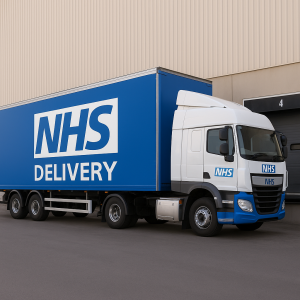
In mid-October, NHS Supply Chain published its October 2025 newsletter highlighting two items especially relevant:
-
A Winter Working Group has been established to anticipate spikes in demand for winter-related products and ensure sufficient stock and planned delivery schedules.
-
Approval has been secured by government for the IT and supply chain modernisation programme within NHS Supply Chain — aimed at improving ordering, delivery, inventory and overall supply chain visibility.
Implications for logistics providers:
-
Public sector bodies (like NHS) are clearly prioritising resilience and supply chain robustness — and logistics firms that can demonstrate strong track records, modern systems, real-time visibility, and delivery reliability will be favoured.
-
The need to support “winter surge” planning emphasises that demand phasing and seasonality are more visible now in healthcare logistics than ever.
4. Contracting Trends: GMP-Compliant Depot in Saudi Arabia

A less headline grabbing but strategically significant development: According to Logistics Manager (30 October 2025), AJEX Logistics Services opened a 3,000 m² GMP/GxP-compliant healthcare products logistics depot in Saudi Arabia.
Why it matters:
-
The Middle East is emerging as an important logistics hub for healthcare and life-sciences, due to location, trade-routes, and regulatory investment.
-
For UK/European logistics providers, this reminds us that competition and partnership opportunities span global zones — not just traditional Europe/North America.
-
For clients you serve, pointing to global capability, multi-region coverage, certification (GMP/GxP) is valuable.
5. The Big Picture: What These Developments Mean for the Medical Logistics Landscape
Key take-aways for 2025-26:
-
Scale & specialisation matter. Providers need to have infrastructure, multi-region reach, regulatory credentials (cold chain, GMP/GxP), and digital visibility to compete.
-
Technology & digital supply chains are mainstream. The market growth projections highlight inventory & warehouse management and supplier performance management as key segments.
-
Resilience & public-health demand are growing. NHS’s winter planning and modernisation signal that logistics isn’t just commercial but critical national infrastructure.
-
Global trade lanes and emerging hubs are relevant. Saudi Arabia’s GMP depot, partnerships like U-Freight’s, highlight that medical logistics is increasingly transnational.
-
Outsourcing and 3PLs are on the rise. The large 3PL market forecast shows pharma, hospitals and med-device companies are shifting logistics burdens outward.
About Dynamic
At Dynamic, we specialise in supporting clients in highly regulated healthcare logistics and the healthcare supply chain.
Contact us to explore how we can deliver robust logistics solutions tailored for the healthcare sector.